A typical kitchen remodel timeline runs about four to six months from the first planning meeting to the final walkthrough. The most disruptive construction phase usually lasts between eight and 12 weeks. During that time, you’ll move through clear stages: planning and design, ordering materials, demolition and rough work, cabinet and counter installation, and finishing touches like backsplash, paint, and hardware.
Planning a kitchen remodel involves many steps. A lot of steps sound like a lot of time. The kitchen is the heart of the home, and being without it, even for a few weeks, is daunting.
So, how long does it actually take to remodel your kitchen?
When you work with a professional team and outline a clear kitchen remodel timeline, you’ll know what to expect at every step, from your first design consult to that final “wow” moment when you walk into your completed space.
In this guide, we’ll walk you through the full process: planning, demolition, construction, and finishing touches, so you know what to expect during your experience.
Big‑picture kitchen remodel timeline
Every project is unique, but they will follow a similar pattern:
- The planning and design stage takes one to three months
- Ordering and permitting often overlap with the design phase and last one to two months
- Active construction tends to be an eight to 12-week process
- The final details and walkthrough finish in roughly one to two weeks
That means a realistic total timeline for a full kitchen remodel is usually around four to six months from “let’s do this” to “we’re cooking in here again.” Smaller, cosmetic projects can wrap up sooner. It’s the larger, structural overhauls that take a bit longer.
Phase 1: Planning your kitchen remodel (1–3 months)
The more thought you put into planning, the smoother the rest of your kitchen remodel timeline will be.
Clarify your goals
Start by asking yourself:
- What isn’t working in my kitchen right now?
- Am I focusing on a kitchen cabinet remodel, a kitchen counter update, or a full gut?
- Do I need more storage, better layout, updated style, or all of the above?
This is where you define your “must‑haves” versus “nice‑to‑haves.” Maybe that custom pantry is non‑negotiable, while waterfall counters are a wish‑list item if the budget allows.
Set a realistic budget
Outline a budget that fits your goals and home value. A full kitchen remodel may include:
- Cabinetry (a significant portion of the budget)
- Countertops (stone, solid surface, or other upgrades)
- Appliances
- Flooring and backsplash
- Plumbing, electrical, and lighting
- Labor and permits
- A contingency fund (commonly 10–20% for the unexpected)
When you work with a design‑build team, they’ll help you understand typical cost ranges and where to invest for the most impact and resale value.
Design and layout
Once goals and budget are clear, the fun part begins: design.
- Refine your kitchen layout around your workflow.
- Plan your kitchen cabinet remodel door styles, configurations, interior storage, and finishes.
- Choose your kitchen counter materials, edge profiles, and color scheme.
- Plan for the types of lighting you want (overhead, task, and accent).
- Coordinate flooring, backsplash, and paint colors.
Your designer will translate your ideas into detailed plans and 3D renderings so you can visualize the new kitchen before work begins.
Phase 2: Ordering, permits, and prep (1–2 months)
Ordering cabinets, counters, and appliances
Cabinetry and countertops often drive the schedule, especially for semi‑custom or custom options. Once you’ve approved your kitchen cabinet remodel design:
- Cabinets are ordered and assigned a lead time
- Countertops are tentatively scheduled around your cabinet install
- Appliances are selected and ordered so they’re on site when needed
Having these pieces lined up early helps keep the kitchen remodel timeline on track.
Permits and approvals
If your project involves moving walls, modifying plumbing or electrical, or changing windows and doors, your contractor will pull the appropriate permits. This step ensures your remodel meets local building codes and passes inspections as you move through the process.
Setting up a temporary kitchen
Before demolition day, plan a simple “backup” kitchen so you can still function. This might include:
- A small prep table or folding table
- A microwave, toaster oven, or hot plate
- A temporary fridge (or relocating your existing one)
- A nearby sink (often in a laundry room or bathroom)
It doesn’t have to be fancy; it only needs to get you through the construction phase.
Phase 3: Demolition and rough work (about 2–4 weeks)
Demolition
Depending on the extent of your remodel, your team will carefully remove existing cabinets and countertops, old appliances, backsplash, flooring, and any soffits or non‑structural walls.
Structural and rough‑in work
If you’re changing walls or openings, this is when framing happens. Behind-the-wall updates also happen during this time, such as plumbing rough-ins for the sink, dishwasher, or refrigerator. Electrical work and HVAC adjustments will happen during this phase. Once everything is complete, you need to pass a city inspection to proceed to the next step.
Phase 4: Walls, floors, and prep (about 2–3 weeks)
With the skeleton in place, it’s time to close things up and prepare the canvas for your finished kitchen. Start by installing insulation (especially on exterior walls), then hang, tape, and finish the drywall; next, prime walls and ceilings, and add a first coat of paint to reduce masking, and carefully cut in around finished cabinetry and trim later.
Depending on your design, flooring is installed either before or after cabinets; many projects run the flooring first across the entire kitchen area for a seamless look, then protect it during cabinet installation.
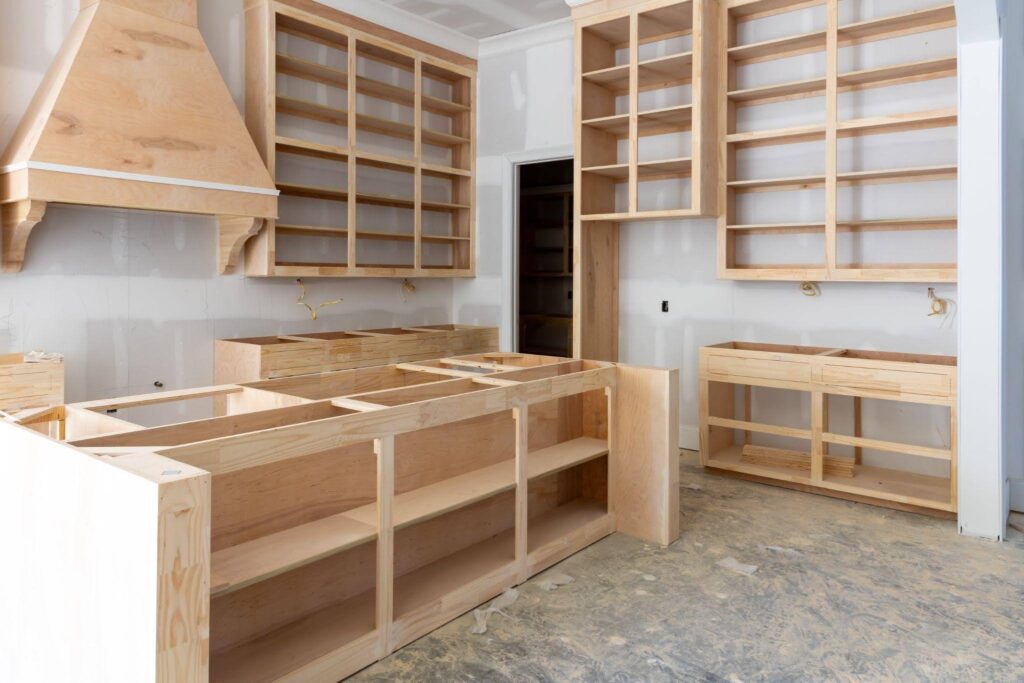
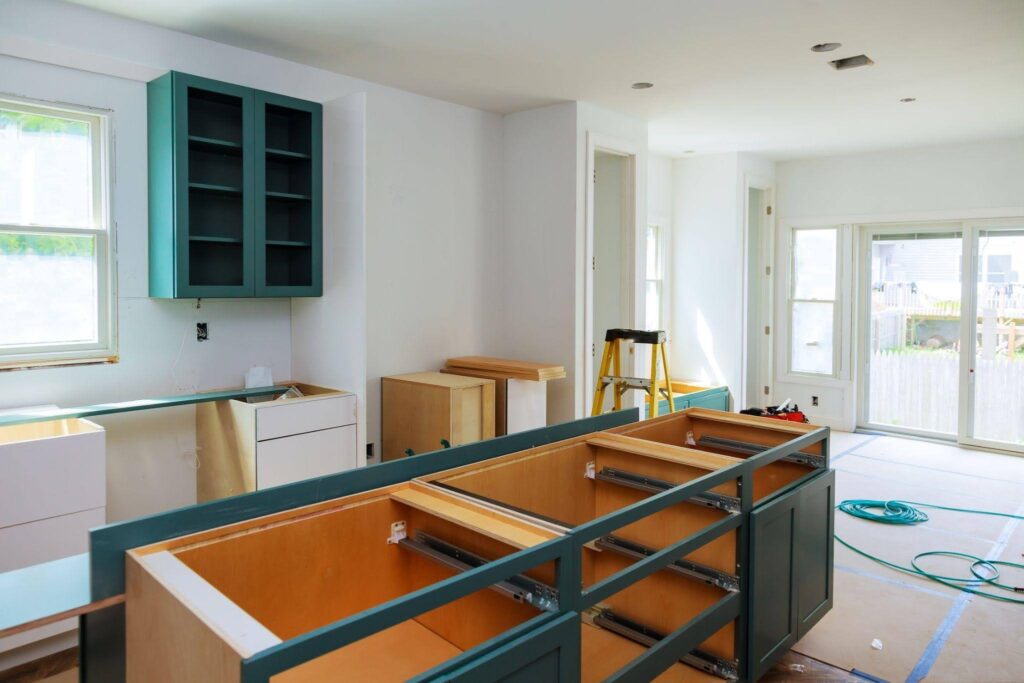
Phase 5: Kitchen cabinet remodel and counter installation (about 3–5 weeks)
Cabinet installation
Your new kitchen cabinets are delivered, inspected, and installed first. The crew levels and secures base cabinets, then hangs and aligns wall and tall cabinets, adding any panels and trim needed for a clean, finished look. Your countertops, backsplash, and appliances all rely on accurate cabinet placement.
Kitchen counter update
Once the crew sets the cabinets, they create countertop templates to capture exact measurements, then fabricate the counters off‑site and install them, carefully fitting and sealing seams and edges.
Phase 6: Fixtures, backsplash, and final details (about 3–4 weeks)
Plumbing and appliances
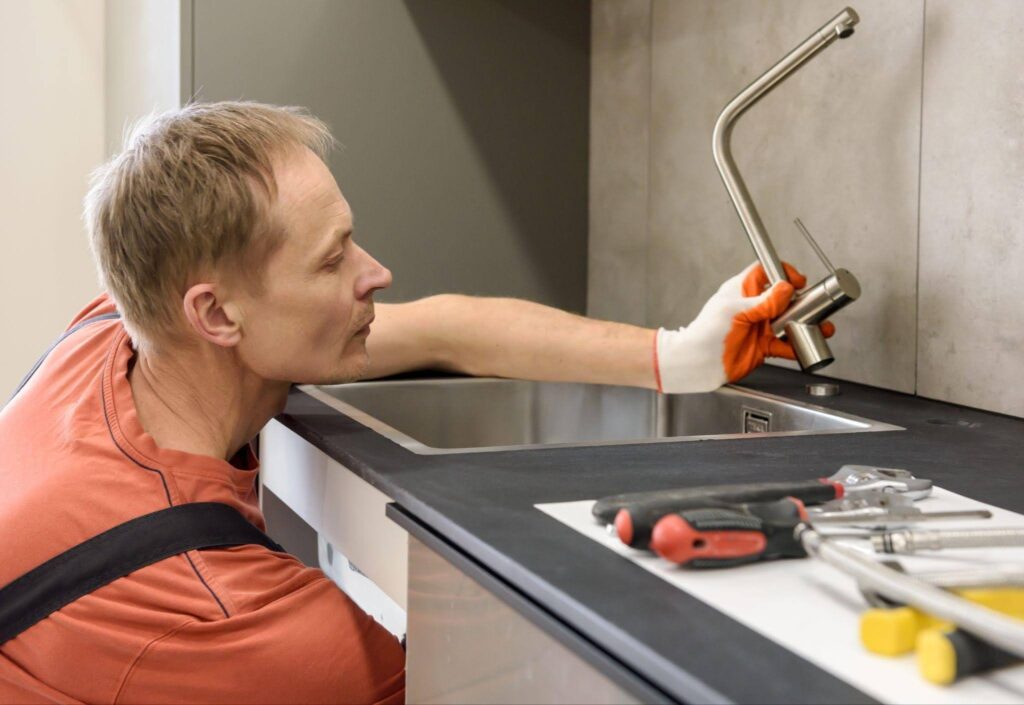
At this stage, your kitchen looks and feels almost finished. Installers set sinks and faucets, connect garbage disposals and dishwashers, place ranges, cooktops, wall ovens, refrigerators, and hoods, and then test to make sure everything is working.
Backsplash and trim
Next comes the smaller details. The team installs and grouts tile or wall panels, places crown molding and toe kicks, and mounts cabinet hardware. These details pull the design together and move the room from “new install” to truly finished.
Lighting and paint touch‑ups
Electricians install and wire ceiling and under‑cabinet lighting. They also add switch plates and outlet covers.
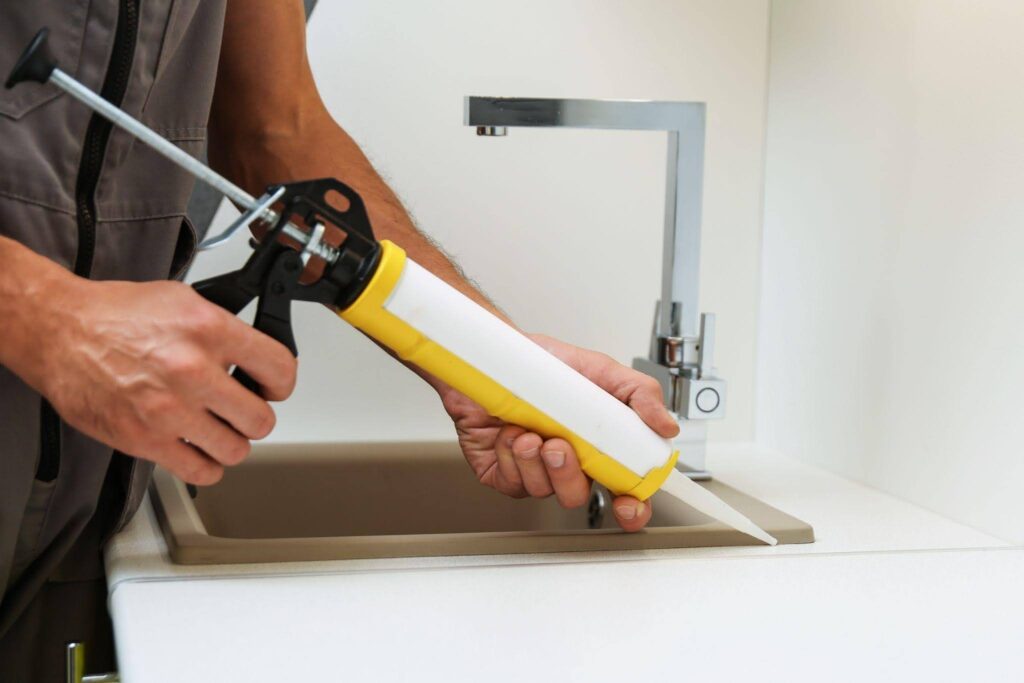
Painters handle any remaining touch‑ups and caulking. The crew completes punch‑list items and minor adjustments so your kitchen is ready for everyday use.
Phase 7: Final walkthrough and move‑in (about 1–2 weeks)
The last step is for fine‑tuning and enjoying your new space.
- Your contractor will walk the kitchen with you and note any small items to adjust or correct.
- Wrap up any remaining punch‑list items, such as door adjustments, caulk lines, and minor fixes.
- A thorough cleaning leaves your kitchen ready for dishes, décor, and daily life.
FAQ
How long does a full kitchen remodel usually take?
Most full kitchen remodels take between four and six months from initial planning to final walkthrough. The active construction phase, when your kitchen is out of commission, typically lasts eight to 12 weeks.
Can I shorten the kitchen remodel timeline?
You can shorten the timeline by keeping your layout and utilities in place, choosing readily available materials, and making decisions quickly. However, quality workmanship and inspections still take time.
What is a realistic budget for a kitchen remodel?
A realistic budget for a full kitchen remodel often ranges from mid–five figures to low–six figures, depending on your home, finishes, and scope of work. Many homeowners allocate the largest share to cabinetry and countertops, then plan for appliances, flooring, lighting, and a 10–20% contingency to cover surprises behind the walls or design changes along the way.
Will I be without a kitchen the entire time?
You’ll be without a fully functioning kitchen, mainly during the demolition and rough‑in phase through cabinet and counter installation, which is typically between eight to 12 weeks. Many homeowners set up a temporary kitchen to make this period more comfortable.
Where should I begin my kitchen remodel?
Start by clarifying your goals and budget, then move into layout and design. Decide what isn’t working in your current kitchen, outline your must‑haves, set a realistic price range, and gather inspiration photos. Once you have that foundation, meet with a designer or remodeler to turn your ideas into a clear plan and timeline before ordering materials or scheduling demolition.
Remodel your kitchen with Mountain States Kitchen and Bath
A kitchen remodel is a big step. From that first conversation about your goals and budget to the final walkthrough and move‑in, Mountain States Kitchen and Bath is there for every stage to guide the process, coordinate timelines, and keep your project on track.
Whether you’re planning a full kitchen transformation, a focused kitchen cabinet remodel, or a targeted kitchen counter update, our designers and craftsmen work with you to create a space that looks beautiful, functions effortlessly, and fits your home and lifestyle. When you’re ready to start your kitchen remodel, contact Mountain States Kitchen and Bath. We will help you turn your ideas into a finished kitchen you’ll love coming home to every day.