Not all kitchen countertops are heat-resistant. Materials like granite, quartzite, porcelain, soapstone, and stainless steel handle heat better, while quartz, laminate, and solid surface need more protection. Even with heat-resistant countertops, it’s best to use trivets or hot pads for hot pans and appliances.
When updating or building a kitchen counter, there are many factors to consider, including style and aesthetics, as well as materials. Heat resistance should be a main consideration. Some countertop materials handle high heat, while others will get burn marks from a hot pan, baking dish, or small appliance set directly on the surface.
The short answer is that some surfaces are heat-resistant, but no material is 100% heatproof. Even sudden temperature changes, prolonged extreme heat, or repeated exposure over time can damage the most durable options.
What does heat-resistance mean
Heat resistance refers to how well any material withstands high temperatures without discoloring, warping, cracking, or burning. This affects your kitchen countertops because people often place hot cookware on the counter, and even a few seconds of contact can damage the wrong surface.
It’s also important to understand that “heat-resistant” doesn’t mean “safe for anything” or completely “heat-proof.” A countertop may perform well against moderate heat but still be vulnerable to direct contact with a scorching skillet or the base of a hot appliance.
Heat-resistant countertops
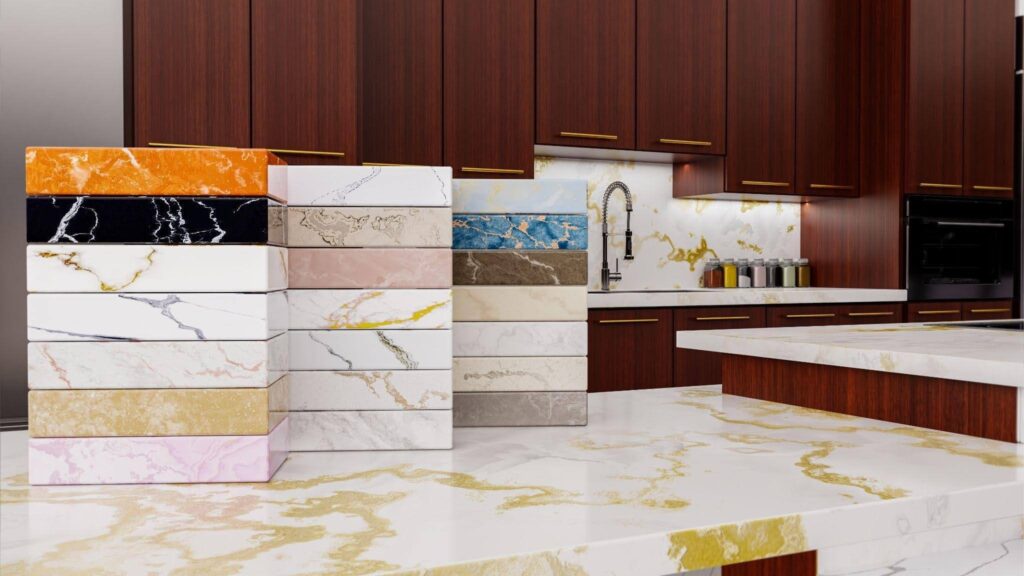
There are definitely better-suited countertop materials for heat exposure than others. If you cook often and want a surface that stands up to daily use, these are some of the strongest choices.
Granite
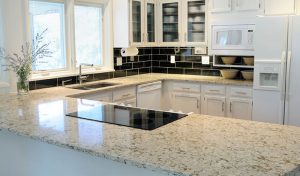
Granite is one of the best-known heat-resistant countertops because it handles high temperatures better than many engineered materials. It is still smart to use a trivet or hot pad, but granite is generally a strong choice for active kitchens.
Quartzite
Quartzite is another durable option that is often confused with quartz. Because it is a natural stone, it usually offers better heat tolerance than quartz, though it still shouldn’t be treated as completely heat-proof.
Porcelain
Porcelain is also highly heat-resistant and performs well in kitchens. It handles hot cookware better than many common countertop materials, making it a practical option for serious home cooks.
Stainless steel
Stainless steel is extremely heat-tolerant. You often see it in professional kitchens for that reason. It has a modern look and performs well with hot pans, though it shows scratches or fingerprints.
Soapstone
Soapstone is known for its natural heat resistance and is one of the more forgiving countertop materials. It develops character over time, which some homeowners like, especially in traditional or farmhouse-style kitchens.
Concrete
Concrete also holds up well under heat, but it isn’t completely immune to damage. The mix, finish, and sealer all play a role in how well it performs in use.
Materials that need more care
Some kitchen countertop options are popular for their appearance or low maintenance, but they don’t have the best heat tolerance. These surfaces are still great choices, as long as homeowners understand the tradeoff.
Quartz
Quartz is one of the most popular countertop materials because it is nonporous, low-maintenance, and available in many colors and patterns. However, it doesn’t tolerate heat as well as natural stone because high heat can damage the resin it contains.
Laminate
Keep the laminate away from hot pans and appliances. It will warp, scorch, or discolor if exposed to direct heat, so always use hot pads or trivets when setting down cookware straight from the stove or oven.
Solid surfaces
Solid surface countertops are also more vulnerable than materials like granite or porcelain. They offer a smooth look, but direct heat leaves marks or causes damage if the surface isn’t protected.
Wood and butcher block
Wood and butcher block countertops bring warmth and texture to a kitchen, but they aren’t ideal for hot cookware. Heat scorches the surface, drying it out or leaving marks that are difficult to remove.
Marble
Marble is beautiful, but it isn’t a forgiving option when it comes to heat and other types of wear. While it handles some warmth, it’s a more high-maintenance surface that benefits from extra care.
Why you might still choose less heat-resistant surfaces
Even when a surface isn’t among the most heat-resistant countertops, homeowners still choose it for good reasons. Quartz, for example, is a favorite because it is easy to clean, doesn’t need sealing, and looks great in modern kitchens.
Many people prioritize stain resistance, design flexibility, and low upkeep over heat performance. In everyday use, most countertops aren’t going to hold hot pans for long periods, so a surface is still a practical choice even if it isn’t the strongest in this category.
Budget also influences the decision. Some materials offer the look a homeowner wants at a price point or availability level that makes sense for the project.
How to protect your countertops
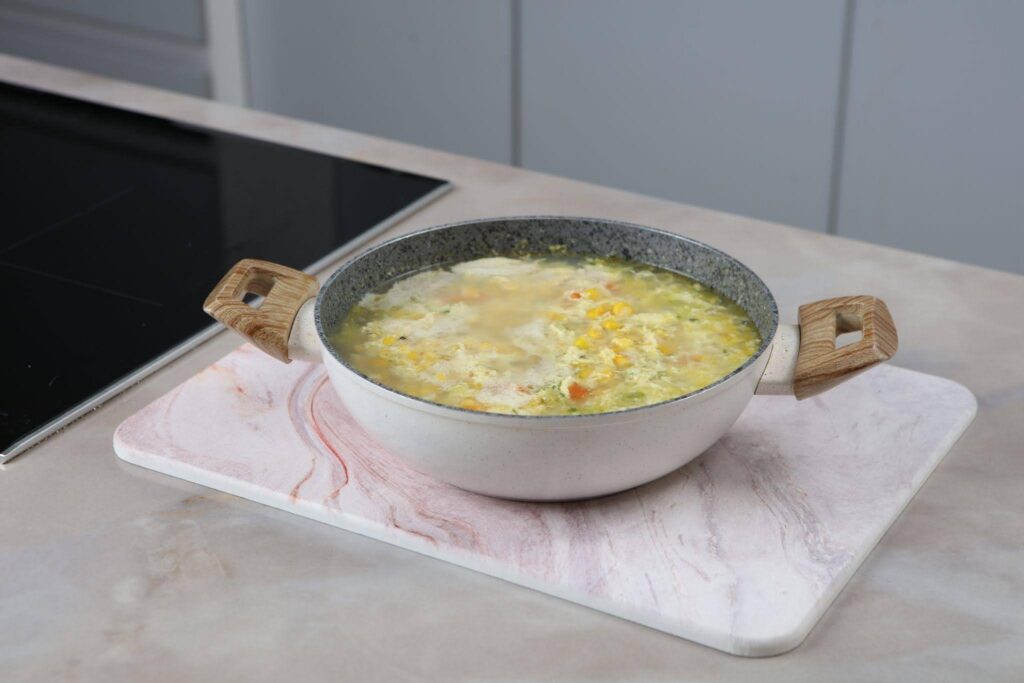
No matter what surface you choose, a few simple habits will extend its life. The easiest way to prevent heat damage is to use trivets, hot pads, or heat-safe mats anytime you place cookware on the counter.
Avoid setting hot appliances directly on the countertop, especially in the same spot repeatedly. Slow cookers, toaster ovens, and air fryers may cause prolonged exposure to heat, leading to damage over time.
Choosing the right surface
The best countertop for your kitchen depends on how you use the space. If you cook frequently and want a surface that handles heat better, granite, quartzite, porcelain, soapstone, or stainless steel are the best options.
If your priorities are low maintenance, color consistency, and style options, quartz or solid surface may be more appealing. The right choice is about matching the surface to your cooking and general kitchen habits.
For many homeowners, the best decision is a balance of durability, appearance, and day-to-day convenience.
Common heat-related mistakes that damage countertops
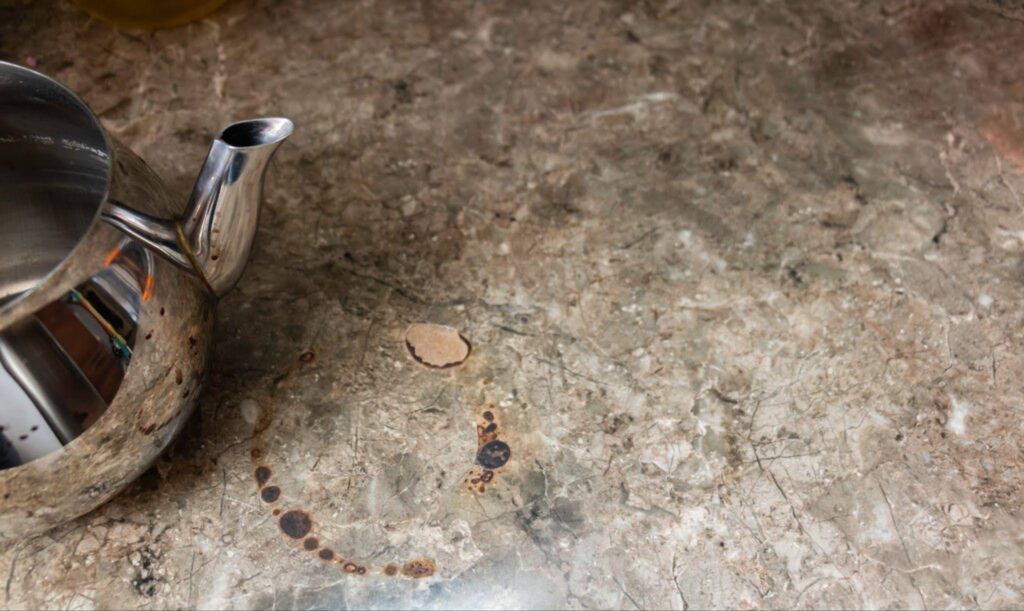
Even durable, heatproof countertops may get damaged by everyday habits. One of the most common mistakes is placing a hot pan, baking dish, or pot directly on the surface instead of using a trivet or hot pad. That will likely leave scorch marks, discoloration, or even permanent damage, depending on the material.
Another mistake is setting small appliances, like air fryers, toaster ovens, or slow cookers, in the same spot every day. Repeated heat buildup wears down the finish, causing the counter to look dull or damaged.
People also sometimes assume that a countertop is heat-proof simply because it’s stone. While materials like granite and quartzite handle heat better than laminate or quartz, no countertop is immune to heat damage.
FAQ
Are quartz countertops heat-resistant?
Quartz handles some heat, but isn’t considered fully heat-proof. Hot pans and appliances will damage the resin in the material.
Is granite heat-resistant?
Yes, granite is one of the more heat-resistant countertops, but it is still smart to use trivets or hot pads.
What are the most heatproof countertop materials?
Stainless steel, porcelain, and soapstone are among the strongest options, depending on the look and performance you want.
Do all countertops need protection from heat?
Yes. Even materials that handle heat well will still get damaged by repeated exposure or sudden temperature changes.
Upgrade your kitchen countertops with Mountain States Kitchen and Bath
When comparing heat-resistant countertops, the best choice depends on how often you cook, how much maintenance you are willing to take on, and the look you want in your kitchen. Some materials handle heat better than others, but every countertop benefits from a little protection.
At Mountain States Kitchen and Bath, we will help you find a countertop that balances durability, style, and everyday function. Whether you want a surface that stands up well to heat or one that cleans easily, the right choice starts with your priorities.
Contact Mountain States Kitchen and Bath to find the right kitchen countertops for your home.