Quartz bathroom countertops offer durability and low maintenance but come with trade-offs, such as higher upfront costs, limited heat resistance, and repair challenges compared to materials like granite or laminate. While excellent for high-traffic bathrooms, quartz countertops may not suit every budget, style, or specific needs of countertops and sinks.
Many Utah homeowners love quartz for its clean look and stain resistance. It’s a high-quality stone that works great for bathroom countertops. While it’s a great option for any home, understanding the downsides helps you make informed decisions for your bathroom remodel.
In this guide, we’ll break down the real cons of quartz bathroom countertops, compare them to alternatives, and help you weigh if they’re worth it for your space.
Let’s look at the biggest downsides of quartz.

What makes quartz bathroom countertops popular?
Quartz is an engineered stone made from 90-95% ground natural quartz, mixed with resins and pigments, offering consistent color and patterns unlike natural stone. Bathroom counters made from quartz resist stains from toothpaste, lotions, and makeup better than marble or limestone. It’s non-porous, so bacteria don’t grow, and it doesn’t need sealing like granite.
The trade-off: While quartz bathroom countertops excel in durability and easy care, they are more expensive and have specific limitations that make them less ideal for some bathroom applications.
Main cons of quartz countertops
Quartz shines in many areas, but here are the main drawbacks for bathroom use.
1. Higher upfront cost
According to The Spruce, “Quartz countertops start at around $53 per square foot, up to $149 per square foot. The average cost to install quartz countertops is a little over $100 per square foot.”
2. Limited heat resistance
Hot curling irons or hair tools can scorch or melt resins. Quartz handles room temperature well but isn’t suitable for hot surfaces, such as kitchen stove areas.
3. Repairs aren’t seamless
Chips caused by dropped objects will show filled repairs more often than those on granite.
4. Heavyweight requires reinforcement
Quartz bathroom countertops (20+ lbs/sq ft) demand sturdy vanity framing. Older bathroom cabinets may need upgrades for proper support.
5. Fewer dramatic natural patterns
Engineered quartz offers a more uniform look, but lacks granite’s bold veining. For statement bathroom counters, natural stone will feel more unique.
6. Varies by brand and quality
Lower-end quartz may fade or stain over time. Premium slabs perform better but cost even more.
When quartz countertops for sinks fall short
Certain bathroom sink setups expose the limitations of quartz.
Vessel sinks
Vessel sinks sit on top of the countertop instead of dropping into it, which means the quartz has to support both the sink and daily use around it. If the sink is heavy glass, stone, or concrete, that extra weight puts more pressure on the vanity and countertop structure below.
It makes the setup vulnerable if the counter wasn’t reinforced well during installation.
Undermount sinks
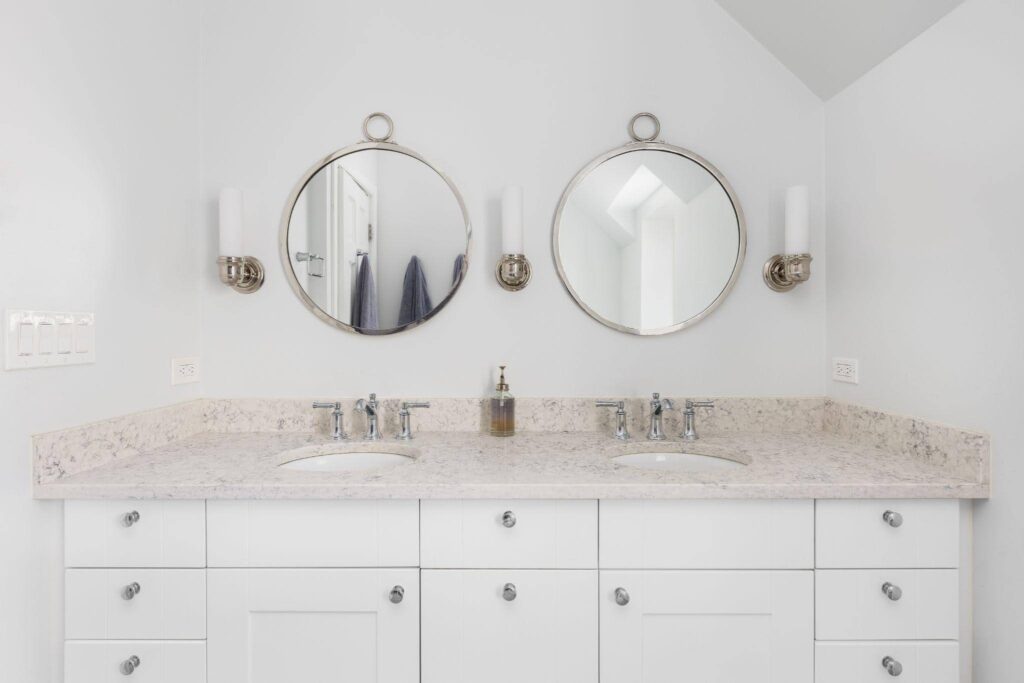
Undermount sinks create a clean, seamless look, but you have to seal the joint where the sink meets the quartz and maintain it carefully. In bathrooms, that seam may collect toothpaste, soap residue, hair, and moisture, so it may require more regular cleaning than a top-mount option.
If the sink is installed poorly, the edge can also become a weak spot over time.
Double sinks
Double-sink vanities usually require a longer slab of quartz, which means more surface area and more exposure to daily wear. That longer span increases the chance of chips or stress damage if heavy toiletries get dropped near the edges or if the vanity isn’t properly supported underneath. It also usually raises material and installation costs.
Kids’ bathrooms
Bathrooms used by kids tend to see more damage, spills, splashes, and rough daily use. Quartz handles a lot, but in a high-impact space, chips and scuffs are more likely to happen simply because the countertop gets rough treatment. That’s why some homeowners prefer a material that’s easier and cheaper to repair in a kid-friendly bath.
Common mistakes when choosing quartz bathroom countertops
Avoid these pitfalls that turn quartz from dream to disappointment.
- Underestimating thickness needs
2 cm slabs sag on spans over 24″; 3 cm adds cost but prevents cracking. - Skipping proper vanity support
Particle board vanities buckle under the weight of quartz over time. - Expecting granite-level heat tolerance
Don’t put hot tools directly on the surface; always use trivets. - Choosing busy patterns for small bathrooms
Fussy designs overwhelm compact vanity spaces. - Ignoring edge treatments
Basic edges look cheaper on high-end quartz; invest in ogee or full bullnose.
Cost and performance data for bathroom countertops
Quartz numbers vs. popular bathroom alternatives:
Material Cost Comparison (per sq ft installed)
| Material | Cost Range per sq. ft. | Heat Resistance | Repair Ease | Weight |
| Quartz | $50–$150 | Medium | Fair | Heavy |
| Granite | $181–$332 | High | Good | Heavy |
| Marble | $107–$196 | Low | Poor | Medium |
| Solid Surface | $40–$60 | Medium | Excellent | Light |
| Laminate | $46–$84 | Low | Poor | Light |
Alternatives to quartz for bathrooms
Not sold on quartz? Consider these based on your priorities.
- Solid surface: Seamless repairs, lighter weight, integrates with sinks
- Granite: Better heat tolerance, natural beauty, needs sealing
- Cultured marble: High-end appearance, molded sinks, consistent color
- Laminate: Lowest cost, huge pattern selection, easy installation
For a deeper look at the different types of countertop options, read “Which Bathroom Countertops Are Best?”
FAQ about quartz
Are quartz bathroom countertops worth the higher cost?
For busy family bathrooms, the stain resistance and low maintenance often make them worth it. For kids’ bathrooms or tight budgets, however, solid surface or laminate usually works better. Both handle dropped items better than quartz (which chips more easily) and cost less while giving a clean, durable look.
Can quartz scratch in bathrooms?
Quartz is pretty scratch-resistant for everyday bathroom use, so you won’t see much from normal wear and tear, like brushing your teeth or applying makeup. However, dropped razors, heavy cleansers, or abrasive scrubbing can cause chips or visible marks. Stick to soft cloths and mild cleaners to keep the surface looking pristine.
How much weight can quartz bathroom countertops hold?
Quartz bathroom countertops safely support about 20-25 lbs. per square foot when properly installed on a sturdy vanity. Adding a heavy vessel sink plus daily toiletries and hair tools can quickly exceed that limit, so you’ll want reinforced cabinet framing to avoid sagging or cracking over time.
Do quartz countertops for sinks need special care?
Not really. Simply wipe them down with mild soap and water using a soft cloth. Skip harsh chemicals, acidic cleaners, or abrasive pads, as those can etch the resins or dull the finish over time. Regular care keeps them looking great without much effort.
Can I cut into quartz for a DIY sink install?
We don’t recommend it. Cutting quartz requires diamond-tipped tools, precise measurements, and professional polishing to avoid cracking or chipping the edges. It’s much safer and looks better to have factory-cut openings done before delivery.
Upgrade your bathroom counters with Mountain States Kitchen and Bath
Quartz bathroom countertops balance beauty and function in many Utah homes. Knowing their limitations helps you choose wisely for your bathroom countertops for sinks. Whether quartz fits your needs or you’d prefer granite, solid surface, or another material, the right vanity surface completes your bathroom’s look.
Ready to explore options? Visit Mountain States Kitchen & Bath for quartz samples, vanity consultations, or complete bathroom counter upgrades. Your perfect bathroom surface starts with one conversation.