
A double vanity offers two sinks and extra storage for busy households, while a single vanity saves floor space and budget in compact bathrooms. Both options work with different bathroom counter sinks, so the right choice comes down to personal taste, room size, users, and how you want your daily routine to go.
Sharing one bathroom quickly turns mornings into a traffic jam, with everyone fighting for mirror space and a place to set their toothbrush on the bathroom counter sink. For some homes, adding a double vanity is the perfect fix; in others, a well-designed single vanity keeps the room feeling open, while providing the counter space needed.
In this guide, you’ll compare double sink vanity and single sink vanity layouts, learn how different bathroom sinks make sense for your space, and see where clearances and storage really matter.
What is a double vs. a single vanity?
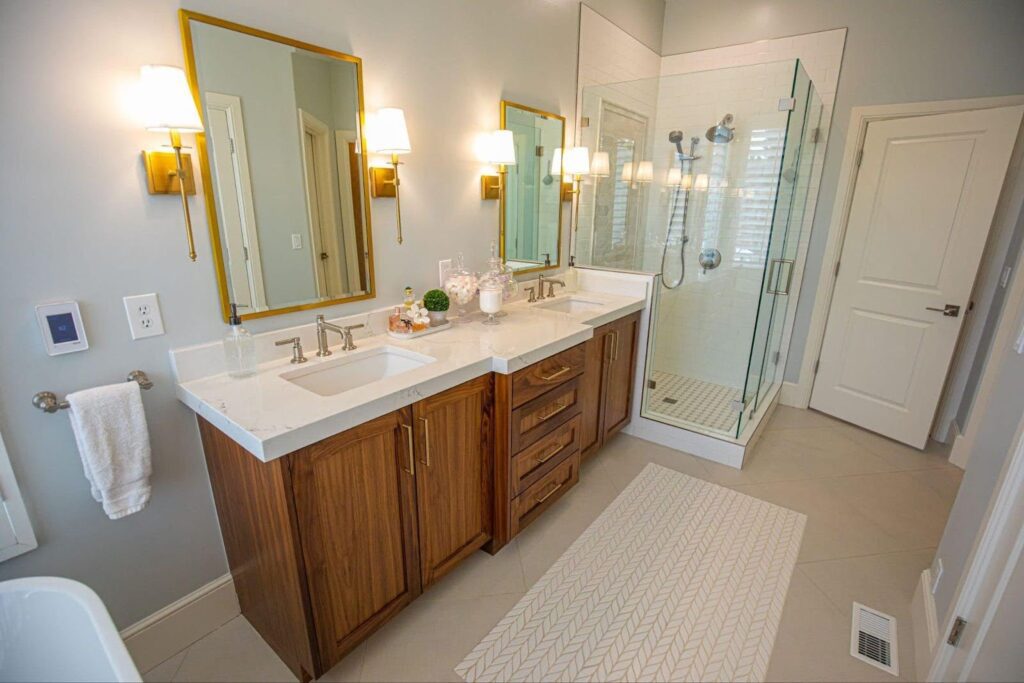
A bathroom vanity is the combined cabinet, countertop, sink, and faucet area that anchors your bathroom’s layout. A double vanity includes two sinks, usually set into a longer cabinet run, allowing two people to get ready at the same time.
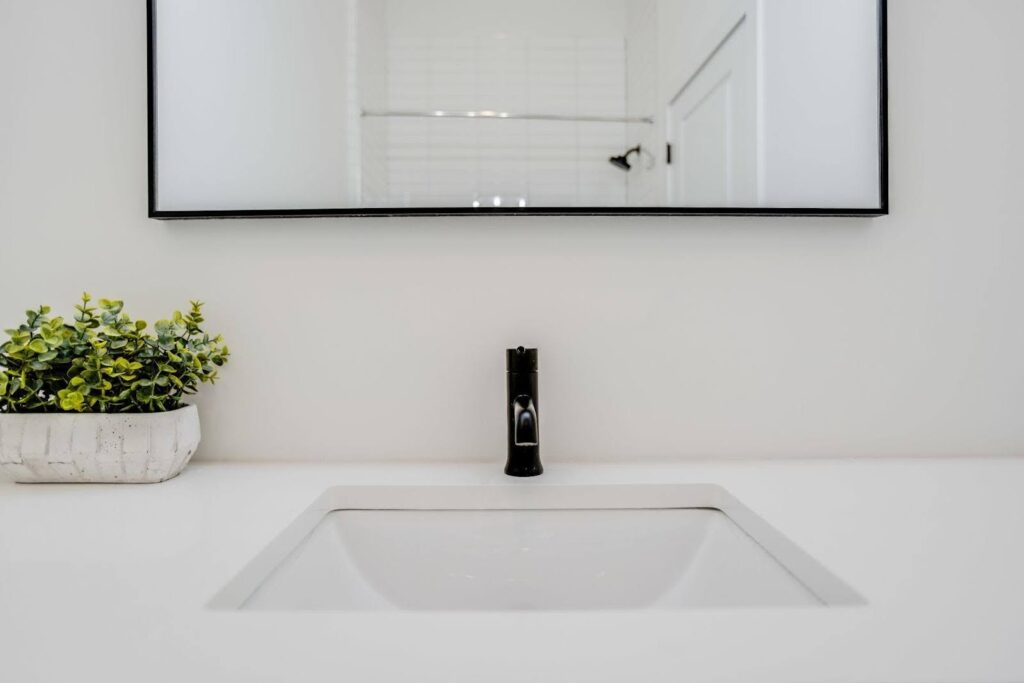
A single vanity uses one sink and typically, a shorter cabinet, making it easier to fit into compact bathrooms, powder rooms, or layouts where you want more open floor space. Both a double and a single sink are customizable in height, storage, and finish, so they coordinate with tile, lighting, and mirrors throughout the room.
Step-by-step guide to choosing your vanity
1. Measure your bathroom
Map the wall where the vanity will go and measure the total length, door swings, and nearby fixtures. This quickly shows whether a double sink counter is feasible or whether a well-planned single sink would function better without making the room feel cramped.
2. Decide how many users you’re designing for
List who uses the bathroom and when. Couples getting ready together, kids sharing a hall bath, or guests using it occasionally take up time and space in the bathroom. If two people regularly need the sink at the same time, a double vanity with two bathroom sinks cuts down on morning bottlenecks.
3. Check clearances and comfort
Make sure you can maintain comfortable, clear floor space in front of the vanity; accessibility guidelines often recommend at least 30 inches by 48 inches of clear area for a sink. If your room can’t accommodate that around a double sink vanity, a single sink will usually deliver a better everyday experience.
4. Balance storage vs. open space
Think about how much storage you truly need for toiletries, towels, and cleaning supplies. Sometimes, a single vanity with tall cabinets and good drawers beats a double vanity with shallow cabinets and crowded bathroom counter sinks.
5. Choose the right sink style and layout
Undermount bathroom sinks create a smooth, easy‑to‑clean surface and are ideal for single and double sink layouts. Drop‑in sinks are more budget‑friendly and work well in family baths, while vessel sinks add a statement look but need careful height planning.
On a double vanity, aim for comfortable spacing between the two bowls; on a single vanity, decide whether a centered or off‑center sink gives you the most usable counter space for your daily routine.
6. Match vanity height to users
Typical vanity and bathroom counter heights are around 34–36 inches for adults, with 34 inches often used when accessibility is a priority. Whether you choose a double sink or a single sink, consistent height and hardware placement make the space feel intentional.
7. Finalize style, finishes, and hardware
Decide on door style, color, and countertop material to tie your vanity into the rest of the bathroom.
Bathroom layout examples
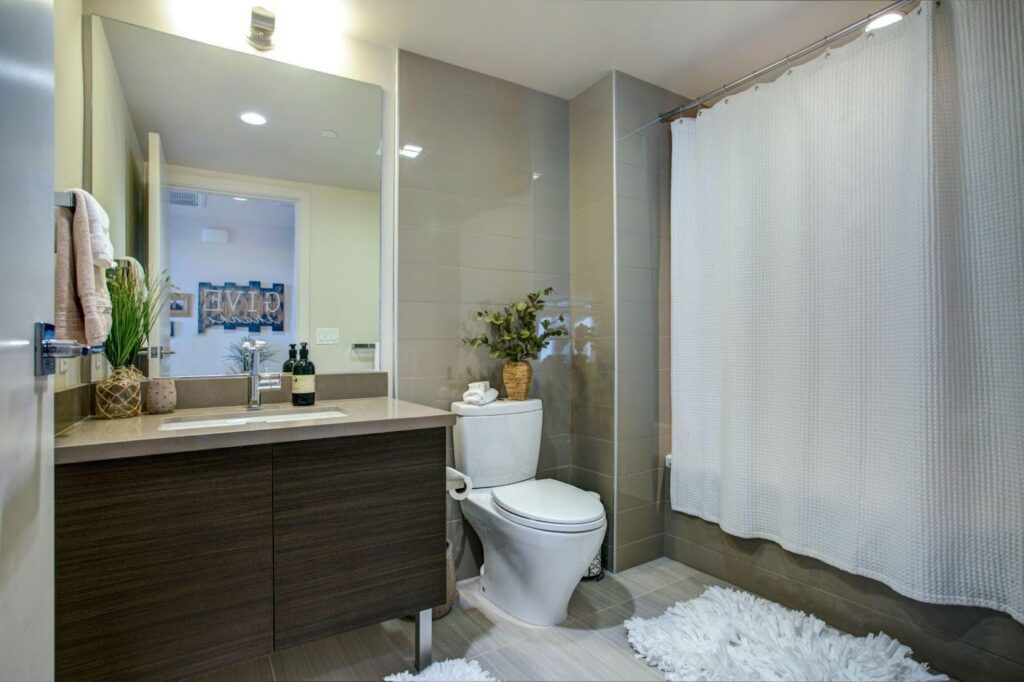
In a compact hall bath, replace an old pedestal sink with a single vanity with drawers and a wider countertop. The space won’t comfortably fit a double vanity, but a new single sink adds closed storage and makes the room feel more finished and organized.
In a guest suite remodel, a single vanity with higher-end materials and a generous countertop to give guests space to spread out toiletries is ideal.
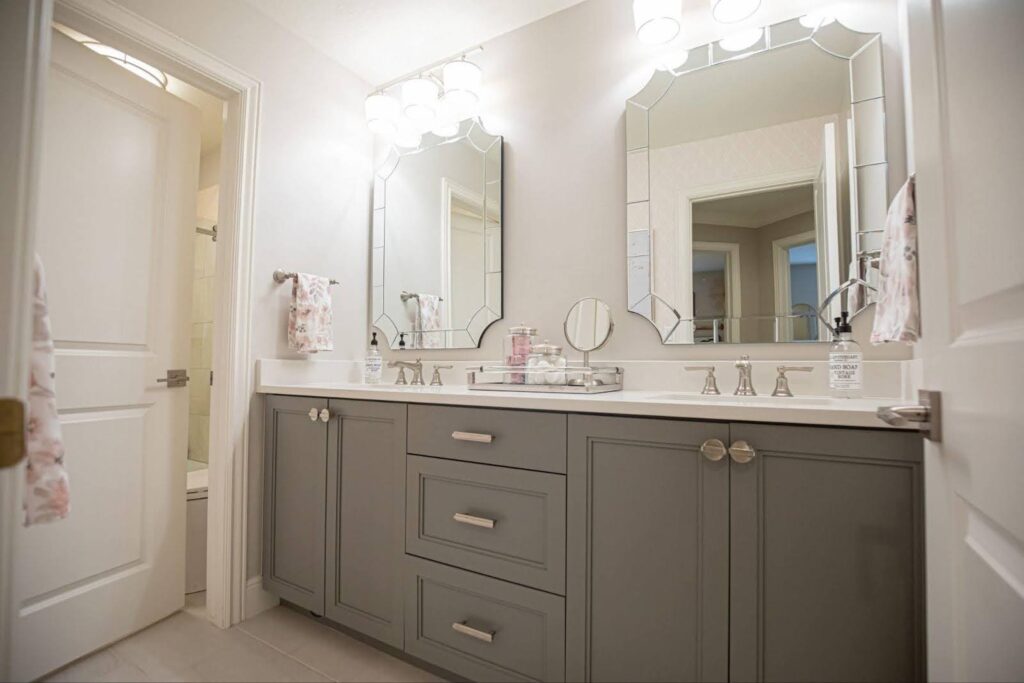
For a busy kids’ bath, choose a double sink paired with durable finishes and an easy-clean bathroom counter to handle splashes and daily wear.
Benefits of each vanity style
Why consider a double vanity?
- Allows two people to use separate bathroom counter sinks simultaneously.
- Adds more cabinet and drawer storage for families or couples.
- Double vanities are a luxury feature that boosts appeal in primary bathrooms.
- They help keep counters clutter-free by giving each person their own space.
Why might you want a single vanity?
- Fits better in smaller bathrooms or narrow layouts.
- Costs less than a double vanity because it uses fewer materials and less plumbing.
- A single sink leaves more open wall or floor space for a larger shower or soaking tub.
- It works perfectly in guest baths or powder rooms where traffic is lighter.
Common vanity planning mistakes to avoid
- Forcing a double vanity into a space that’s too small, leaving tight walkways and awkward door or drawer openings.
- Ignoring recommended clearances around bathroom counter sinks can make the area feel cramped.
- Choosing a double sink but underestimating how much plumbing, countertop, and fixture costs will increase compared to a single vanity.
- Skimping on storage, so counters stay cluttered even when you add more sinks.
- Setting vanity or sink heights that feel uncomfortable for the main users, especially in kids’ or multi-generational bathrooms.
- Focusing only on today’s needs without considering how a double vanity or single vanity choice might affect resale in a few years.
Data and design guidelines
- The ADA guidelines recommend sink or counter height at about 34 inches for comfortable reach, especially when accessibility is a concern.
- Better Homes and Gardens recounts that undermount bathroom counter sinks create a smooth, easy-to-clean surface and work well in both single vanity and double vanity layouts. In contrast, drop-in sinks are more budget-friendly, and vessel sinks add a bold, modern look.
FAQ
Is a double vanity worth it in a primary bathroom?
For many couples, a double vanity is worth it because it allows two people to use separate bathroom counter sinks simultaneously while providing more storage. If your space and budget can support it, it makes mornings smoother and adds perceived value to the room.
When is a single vanity the better choice?
A single sink countertop is usually better for small bathrooms, guest baths, or powder rooms with limited space and lighter traffic. In these rooms, a well-planned single sink with good storage often feels more open and comfortable than a tight double sink counter.
How much space do I need for a double vanity?
While exact needs vary, plan for at least 60 inches of wall length for a comfortable double vanity, and aim for about 30 inches center-to-center between the two sinks when possible. You’ll also want to maintain clear floor space in front of the cabinet for easy movement.
What is a good height for a bathroom vanity?
Standard adult-height vanities usually range from about 34 to 36 inches to the top of the countertop. If you’re designing for accessibility, guidelines often call for a maximum of 34 inches to the sink or counter rim so hardware stays within easy reach.
Can I convert my single vanity to a double?
In many bathrooms, you can convert a single vanity into a double vanity if you have enough wall length and can extend plumbing to serve two bathroom counter sinks.
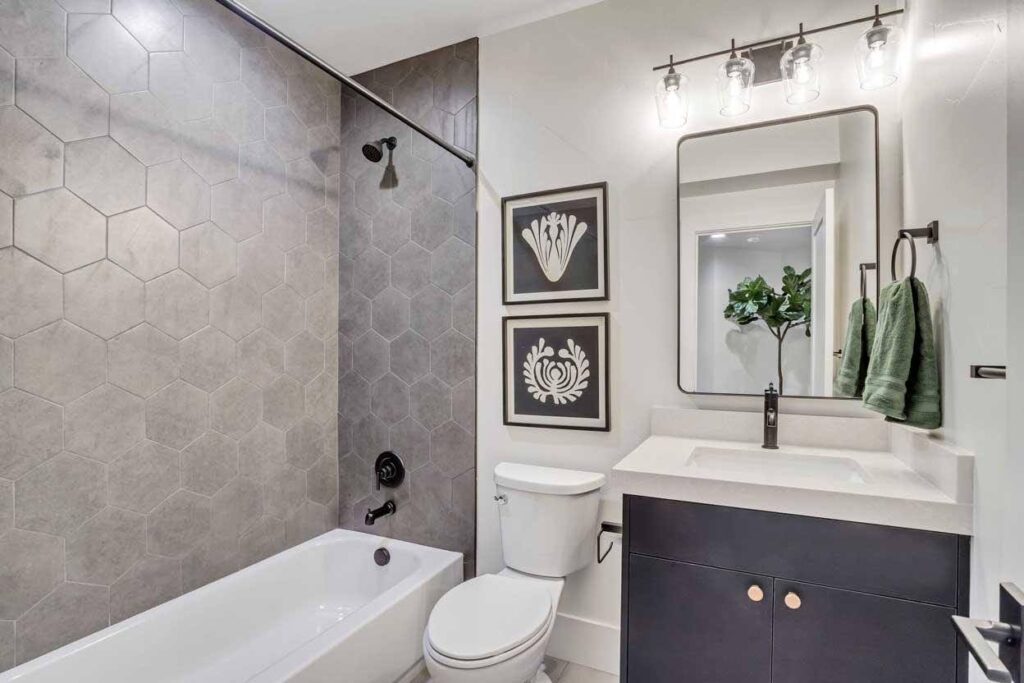
Find the perfect vanity with help from Mountain States Kitchen and Bath
Choosing between a double and a single sink should be about matching your bathroom’s size, storage needs, and daily routines. With the right layout, height, and bathroom counter sink setup, either option will deliver a comfortable, organized space that looks great for years.
If you’re ready to explore designs, materials, and layout ideas, contact Mountain States Kitchen and Bath for a consultation.