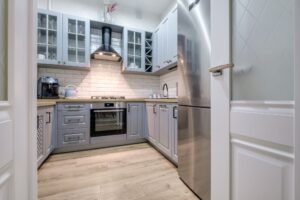
Tour a few new builds along the Wasatch Front, and you’ll see the same kitchen over and over. Every cabinet has the same door in the same color.
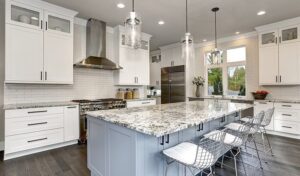
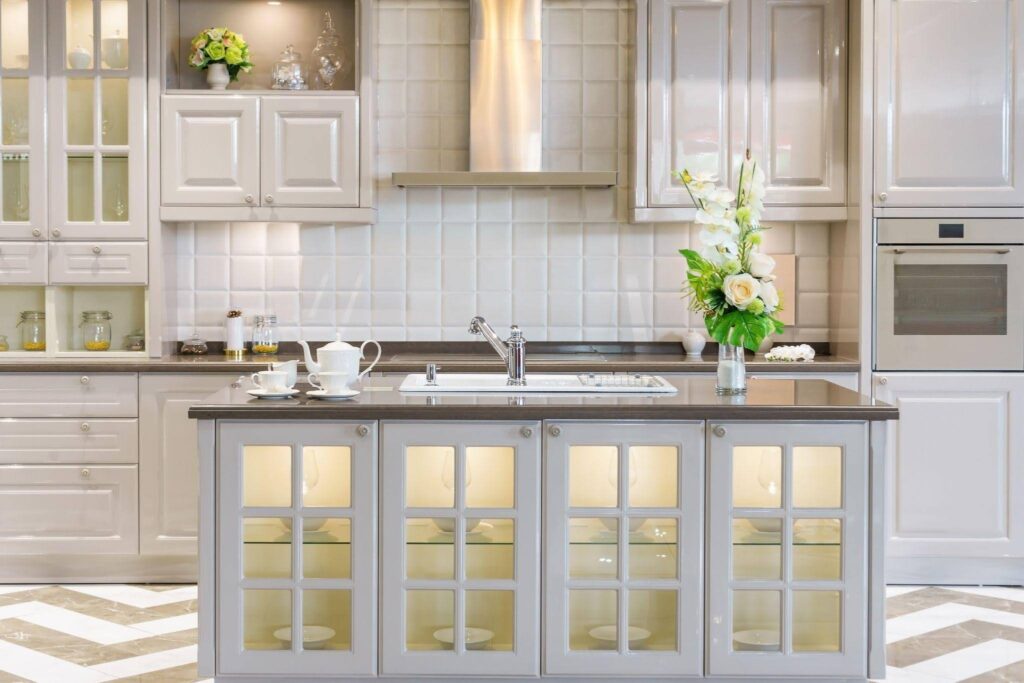
It’s a safe choice, but pairing two cabinet styles, such as a contrasting island or glass-front uppers, gives the same kitchen a more personal look. Custom kitchen cabinetry makes that approach easier to plan.
Mixing cabinet styles adds character and helps define how you use each area, but it takes a plan.
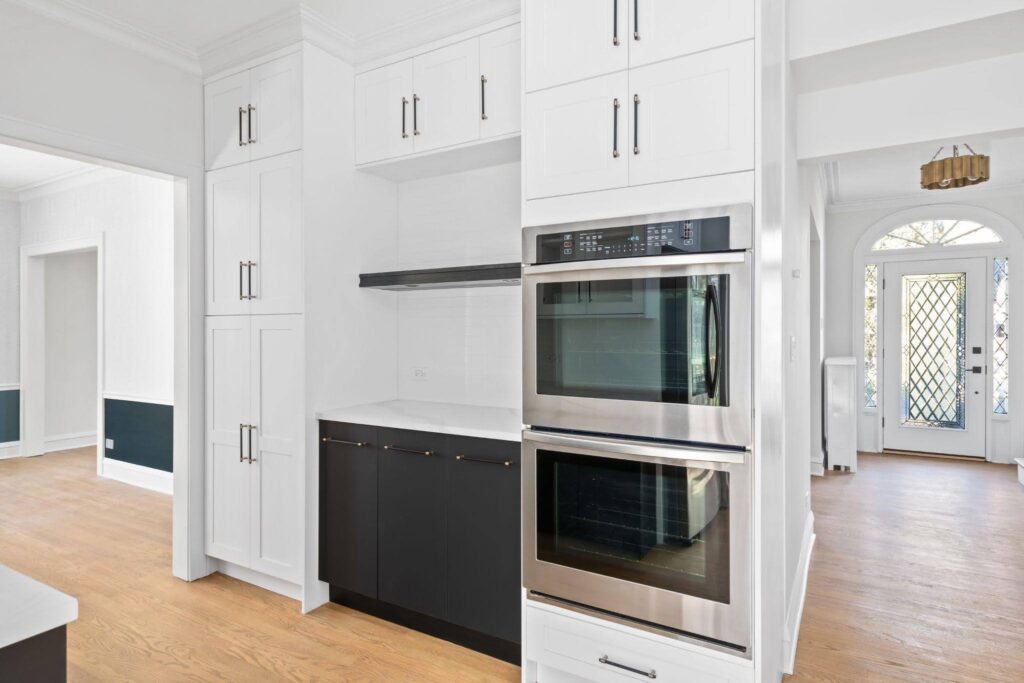
What are the main cabinet styles?
The design style sets the look of the whole kitchen: traditional, modern, or transitional, which blends the two. The door style describes how each door is built, and it’s where most mixing happens.
| Door style | What it looks like and where it fits |
| Shaker | A flat recessed panel inside a square frame. It works in almost any design style. |
| Slab (flat-panel) | A single flat surface with no frame or detail. It suits modern kitchens. |
| Raised-panel | A center panel that rises above the frame. It suits traditional kitchens. |
| Beadboard | Narrow vertical planks with a small bead between each one. It suits farmhouse and cottage kitchens. |
| Glass-front | A glass insert set into a Shaker, slab, or raised-panel frame. It works in any design style. |
Transitional is the most popular design style right now. According to the 2026 U.S. Houzz Kitchen Trends Study, 25% of renovating homeowners who changed their kitchen’s style chose a transitional style. The same study found that Shaker doors account for 58% of new cabinet selections, compared with 22% for flat-panel doors. Shaker’s range across design styles makes it a practical anchor for a mixed kitchen.
How to choose a primary style
The first step in mixing cabinet styles is choosing a primary style. It covers most of the cabinetry, so let your home’s architecture guide it. Simple trim suits modern or transitional cabinetry, while detailed crown molding suits traditional.
Next, choose a secondary style that clearly contrasts with the first. A slight difference, such as two Shaker doors with different rail widths, tends to look like an ordering error.
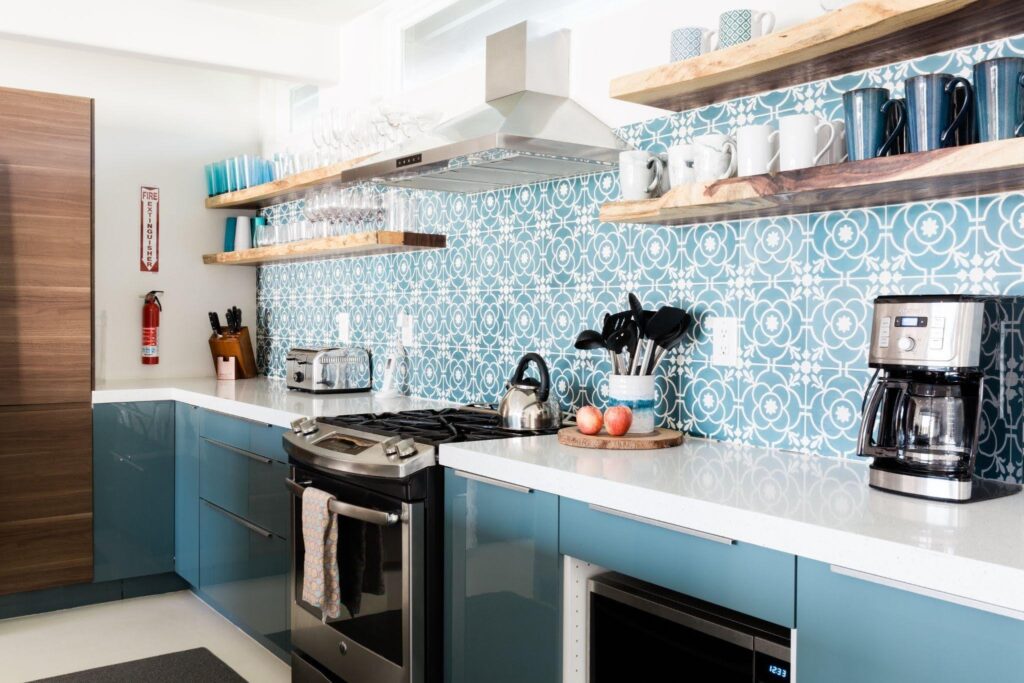
Different upper and lower cabinets
Using different upper and lower cabinets is one of the most common ways to mix styles:
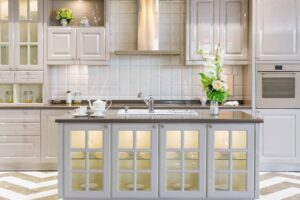
- Glass-front uppers over solid Shaker bases lighten the top of the room and display dishes.
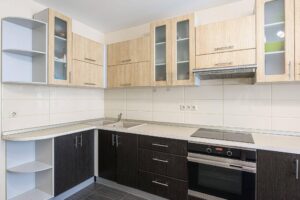
- Flat-slab uppers over Shaker bases keep the eye level clean, while the lower cabinets carry the detail.
- Open shelving in place of some uppers adds display space above closed storage.
Different upper and lower cabinets also help in smaller kitchens. Lighter upper cabinets keep the room from feeling top-heavy, a strategy covered in this guide to small kitchen ideas. Keep the break between styles at the countertop line, since changing styles within one row of uppers usually looks unplanned.
Other places to use different cabinet styles
These spots also give a second style a defined home:
- The island stands apart from the perimeter, so a different door style there reads as a centerpiece. The Houzz study found that 58% of renovating homeowners add or update an island.
- A tall pantry wall can take a bolder style, since it functions almost like furniture.
- A decorative wood range hood brings a traditional element into a modern kitchen.
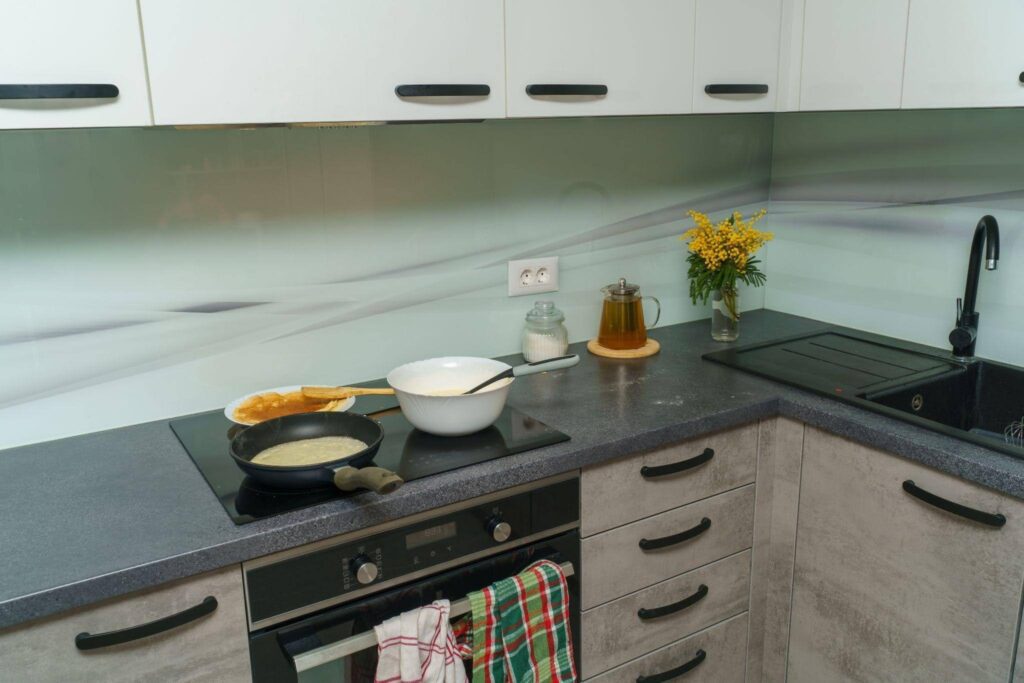
Keep one element consistent
Different cabinet styles look intentional when something ties them together. Carry at least one of these through every cabinet:
- The same paint color on both door styles
- The same wood species or stain
- The same hardware in the same finish
- One countertop material across the perimeter and island
The National Kitchen & Bath Association reports that designers are moving away from kitchens built around a single material and are combining finishes such as wood with stone or matte with sheen. With mixed cabinets, that could mean a matte-painted perimeter and a stained-wood island, tied together by a stone countertop.
If you want to vary color and door style at once, read this guide to two-tone kitchen cabinets first, since changing both leaves less room for error.
Custom vs. semi-custom cabinets for mixed styles
A custom shop can build two door styles in the same wood species and match stains across profiles. Semi-custom lines offer set options, which can limit how far you can mix. For a full comparison, see this breakdown of semi-custom vs. full custom cabinets.
Common mistakes when mixing cabinet styles
- Using three or more door styles makes a kitchen look busy.
- Choosing styles that are too similar makes the difference look accidental.
- Splitting the kitchen evenly between two styles leaves the room feeling divided.
- Putting glass-front uppers over food storage puts clutter on display.
Frequently asked questions
Can you mix cabinet door styles?
Yes. Different cabinet styles work together when one door style covers most of the kitchen and a second appears in a defined area, such as the island. One shared element, such as hardware, ties them together.
What are the different types of cabinet door styles?
The most common cabinet door styles are Shaker, slab, raised-panel, beadboard, and glass-front. Shaker is the most popular and the most flexible.
What style cabinet is timeless?
Shaker is the style most often considered timeless. Its simple frame-and-panel design dates back to 19th-century Shaker furniture, and it adapts easily to new colors and hardware.
What are some modern kitchen cabinet styles?
Slab doors are the most common modern cabinet style. Other modern options include slim Shaker doors, handleless cabinets, and flat doors in high-gloss paint or wood veneer.
What kitchen trends are outdated?
Features tied to one decade tend to date a kitchen fastest, such as heavy ornate molding, orange-toned wood stains, and busy tile borders. A timeless door style paired with easy-to-change hardware and paint helps a kitchen age well.
What makes a kitchen look cheap?
Details that look unplanned are a common cause, including cabinet styles that almost match, mismatched hardware finishes, and uneven gaps between doors. Material quality matters as much as planning, since low-quality finishes, such as peeling thermofoil, can make even a well-designed kitchen look worn.
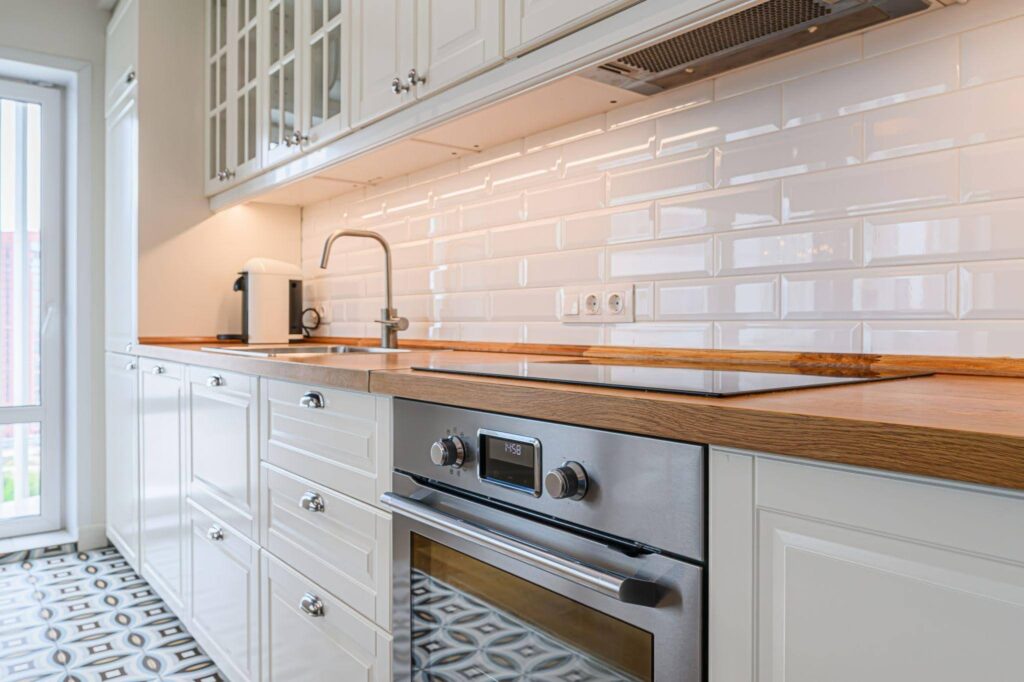
Plan your mixed cabinet design with Mountain States Kitchen and Bath
Mixing cabinet styles comes down to three decisions. First, choose one door style to cover most of the kitchen. Next, give a second style a defined spot, such as the island. Then carry one shared element, such as hardware or wood species, through every cabinet.
Mountain States Kitchen and Bath builds its cabinetry in its own factory, so your designers work directly with the people building it. That direct line makes it easier to match stains across two door profiles. The team is Gephardt Approved and works with homeowners across the Wasatch Front.
Visit the showroom at 1520 N State Street in Lehi, Monday through Friday from 9 a.m. to 5 p.m., to compare door styles side by side. You can also call 801-285-6769 or contact Mountain States online to start planning.