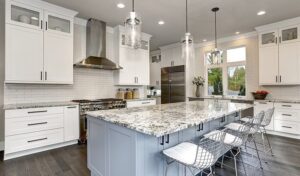
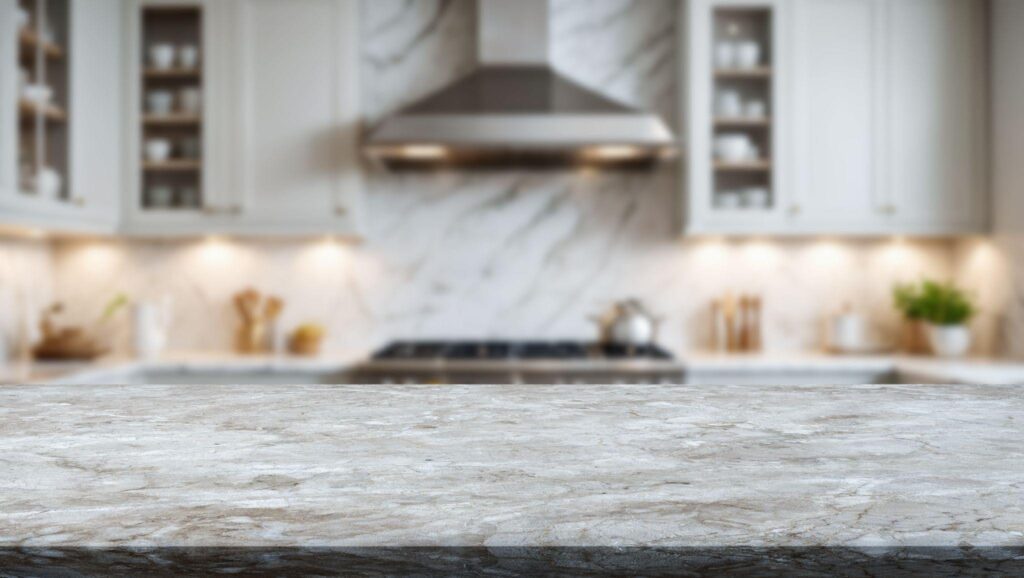
Standing in a showroom staring at slab after slab, quartz and granite often end up two of the top options homeowners weigh against each other. Seeing full slabs in person matters more than any swatch, since color and pattern read differently at full scale. Both materials look great and will outlast a lot of other remodel decisions.
So why does the choice feel so hard?
It’s because the two materials fulfill different needs. Manufacturers engineer quartz for consistency and low maintenance. Granite is a natural stone valued for its one-of-a-kind character. Here’s how quartz vs. granite compares against each other, from daily maintenance to how each holds up under hot pans, sauce stains, and years of prep work.
What quartz kitchen countertops offer
Manufacturers engineer quartz kitchen countertops rather than quarry them. They grind quartz crystal into fine particles, then bind it with resins and pigments under heat and pressure, for a slab that’s roughly 90% to 95% quartz by content.
That manufacturing process is what makes quartz appealing:
- Non-porous surface: Quartz never needs sealing and resists staining better than most natural stone.
- Consistent color and pattern: Because manufacturers control the process, one slab looks like the next, which matters if your kitchen needs multiple pieces to match.
- Low daily maintenance: Warm water and mild soap handle most cleanup.
The tradeoff is heat sensitivity. Direct contact with a hot pan can discolor or crack the resin, so a trivet is worth keeping nearby, even though the surface handles everyday wear well.
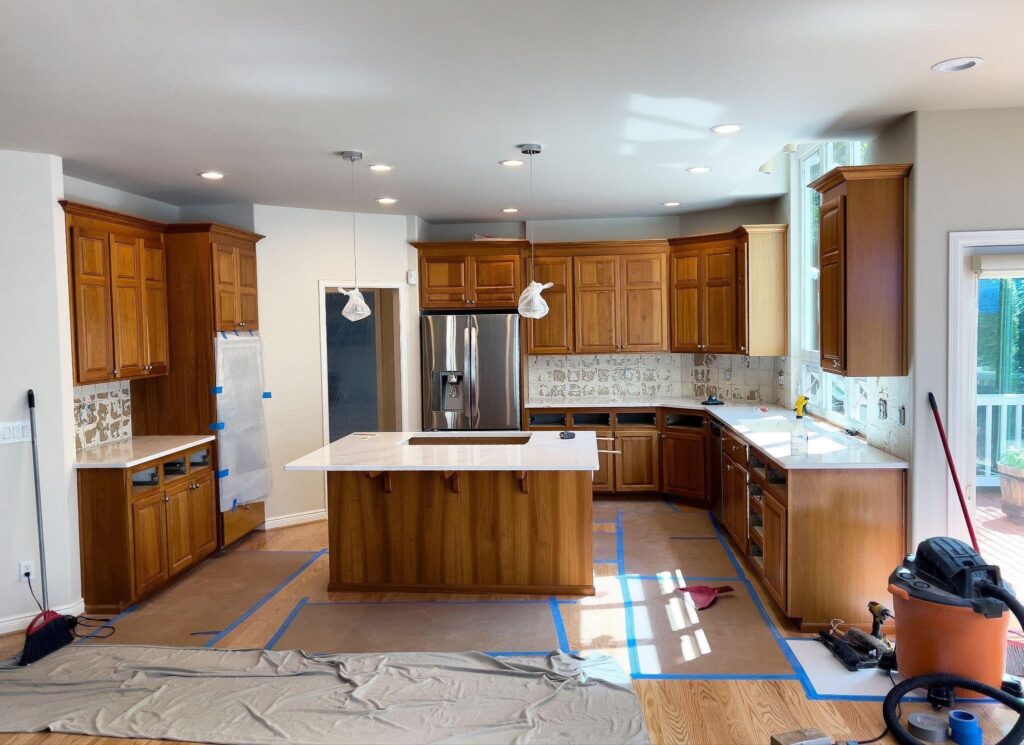
What granite countertops offer
Deep within the earth, cooling volcanic material forms granite, an igneous rock containing quartz, feldspar, and mica. Quarry crews cut it in blocks and slice it into slabs, so no two pieces look alike, which is the appeal for homeowners who want real depth in the stone.
Granite’s strengths are different than quartz. Consumer Reports lab testing rates both materials highly for cutting, abrasion, and heat resistance:
- Heat resistance: Granite tolerates direct contact with hot cookware better than engineered stone.
- Scratch resistance: It stands up well to knives and daily kitchen abuse.
- Natural character: Every slab is distinct, which some homeowners prefer over a manufactured, repeating pattern.
Granite is porous, though, so it needs sealing on a regular schedule to keep stains from setting into the stone. The Natural Stone Institute notes that needs vary by stone type, but a yearly check is a reasonable starting point, with lighter colors or high-use kitchens sometimes needing it more frequently.
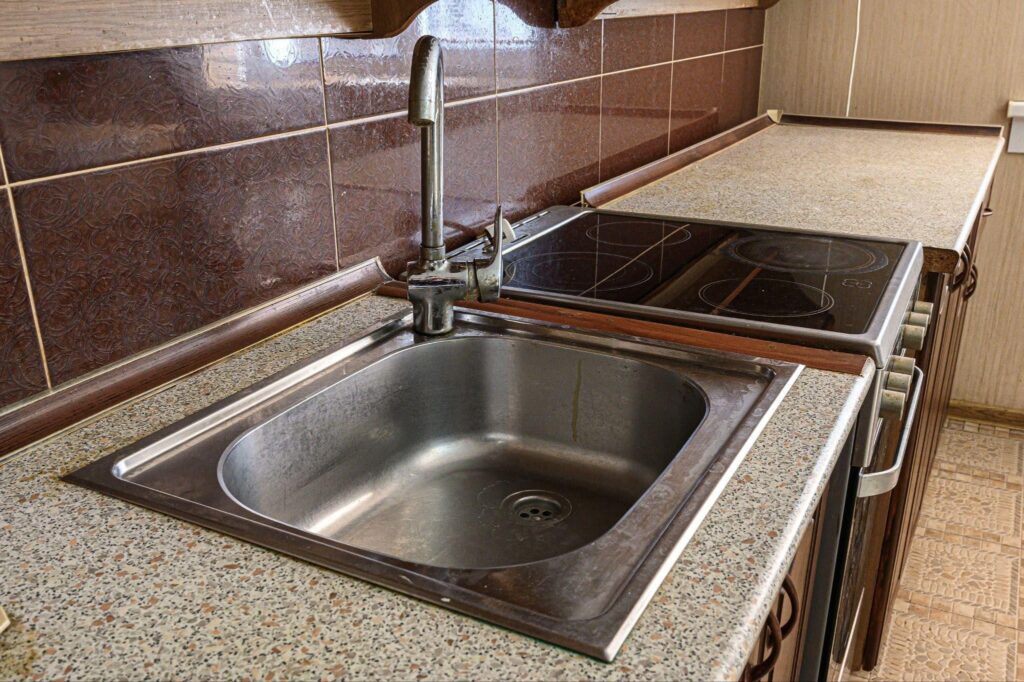
Choosing a granite countertop sink
Homeowners can choose an undermount stainless or composite sink for contrast, or a stone sink cut to match the counter for one continuous look. Pairing a sink with your countertop is worth planning for early in the design process, since the sink style affects both the finished look and how the seam is cut.
A few things to weigh when planning a granite countertop sink:
- Undermount vs. drop-in: Undermount sinks give a granite counter a clean, seamless edge, while drop-in styles are easier to install and replace.
- Material choice: Stainless and composite sinks are common, lower-maintenance pairings, while a stone sink cut to match the counter needs the same sealing schedule as the countertop.
- Weight and support: If you choose a stone sink to match your granite counter, the cabinetry underneath needs reinforcement to support the added weight.
A granite countertop sink doesn’t have to mean matching stone throughout; plenty of homeowners pair a stainless or composite sink with their granite counter for a lower-maintenance look.
How quartz and granite compare in cost
Here’s how the two compare on price in 2026, according to industry data from HomeGuide:
| Quartz | Granite | |
| Price per square foot, installed | $50–$150 | $80–$150 |
| Typical kitchen total cost | $3,000–$8,000 | $2,400–$6,000 |
Premium quartz patterns that mimic marble veining and rare or imported granite colors can push either material well past $200 per square foot. It’s worth getting a written quote based on your actual layout rather than assuming the material alone sets the price. Fabrication, cutouts, and edge profiles typically account for a bigger share of the invoice than the raw slab cost.
Homeowners weighing resale value should note that both materials are widely recognized by buyers and appraisers, so neither typically outperforms the other when it comes time to sell.
Frequently asked questions about quartz vs. granite countertops
Why are people using quartz instead of granite?
Quartz has overtaken granite mainly because it never needs sealing and offers a more predictable look between slabs. Design professionals increasingly recommend it for busy kitchens where homeowners don’t want to think about maintenance, while granite still wins out with homeowners who want the character of natural stone.
What is the most popular countertop right now?
Quartz currently leads as the most popular kitchen countertop material, with quartzite close behind among design professionals. Granite remains a strong option, especially for statement features like waterfall islands, but has moved out of the top spot in recent industry surveys.
Should you use Clorox wipes on quartz?
Most quartz manufacturers, including Cambria, Silestone, and Caesarstone, advise against bleach-based cleaners like Clorox wipes, since repeated exposure discolors pigments and degrades the resin in quartz kitchen countertops.
Some brands note that it can void the warranty. Isopropyl alcohol or mild dish soap and water are safer choices for daily cleanup and disinfecting.
Which is harder to maintain, quartz or granite?
Granite takes more upkeep than quartz. Granite needs periodic sealing to resist stains, while quartz is non-porous and never requires sealing, which is a big reason it’s become the lower-maintenance choice.
How much do granite countertops cost for an average kitchen?
A typical kitchen with 30 to 40 square feet of counter space runs roughly $2,400 to $6,000 installed, according to 2026 industry estimates, depending on granite grade, edge profile, and the number of cutouts needed.
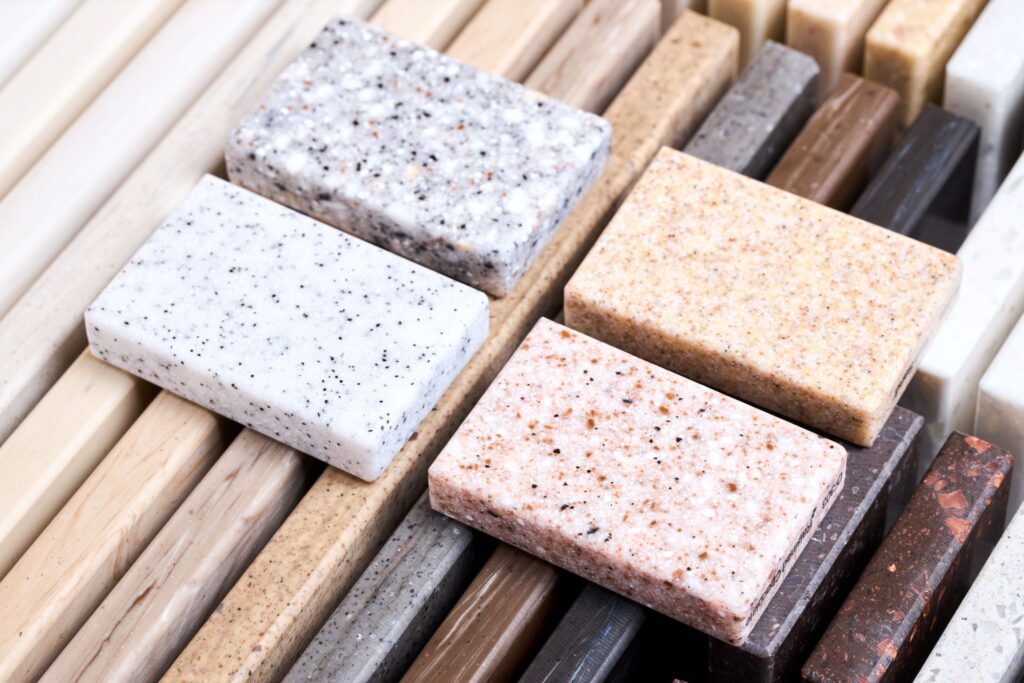
Finding the right material with Mountain States Kitchen and Bath
Whether the quartz vs. granite decision comes down to maintenance or color and pattern, the material you choose sets the tone for your kitchen.
Mountain States Kitchen and Bath works with homeowners across the Wasatch Front, from Lehi to Payson, helping them find the right countertop and sink for their kitchen. As a factory-direct, Gephardt Approved cabinetry manufacturer, the team helps homeowners weigh the material tradeoffs that fit their budget.
Stop by the showroom at 1520 N State Street in Lehi, Monday through Friday from 9 a.m. to 5 p.m., or call 801-285-6769 to set up a free in-home consultation and see quartz and granite slabs side by side.