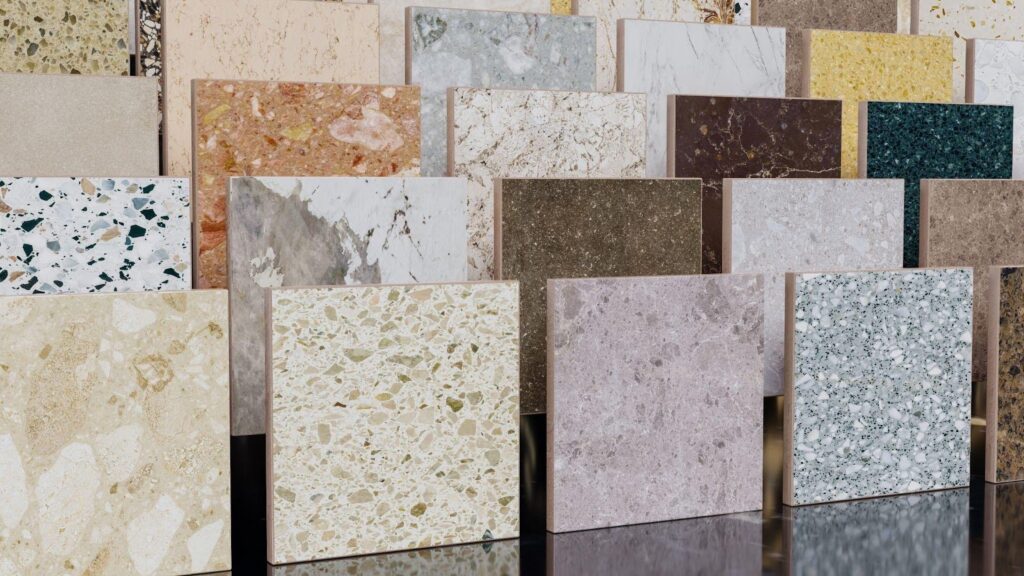
When remodeling a bathroom, the countertop materials need to withstand heat, moisture, daily use, and frequent cleaning. With the variety of options available today, it’s easier than ever to find one that suits your home, whether you prefer the classic look of granite bathroom sinks or the clean, modern feel of quartz bathroom countertops.
Your countertop affects durability, maintenance needs, long-term value, and even the overall feel of your bathroom. This guide walks you through the different materials available and the positives and negatives associated with each one.
What to look for in a bathroom countertop
Bathrooms are high-moisture, high-traffic spaces, which means your countertop must do more than look good. It needs to be durable enough for daily routines, resistant to water and bacteria, and easy to clean. The best bathroom countertop materials strike a balance between style, strength, and long-term performance.
Moisture resistance
Steam, splashes, and standing water are unavoidable. Materials like quartz bathroom countertops and sealed natural stone prevent moisture from seeping in and causing stains or swelling.
Durability and scratch resistance
Your bathroom surface handles everything from cosmetics to hair tools. Stronger materials, such as quartz or granite bathroom sinks, hold up well and maintain their appearance.
Stain and chemical resistance
Toothpaste, makeup, and skin or hair products can discolor certain surfaces. Nonporous materials reduce the risk of staining and make cleaning easier.
Heat resistance
Place hot curling irons or straighteners safely on surfaces that can handle heat. Granite offers excellent heat resistance, while some engineered materials require more caution.
Style and customization
Different bathroom countertop materials offer unique patterns, colors, and textures. Quartz provides a clean, consistent look, while granite and marble deliver depth and natural variation.
Maintenance needs
Some materials require regular sealing, while others offer low-maintenance convenience. If you prefer a surface that stays beautiful with little effort, quartz bathroom countertops are a strong contender.
Now, let’s explore specific materials available.
Marble countertops
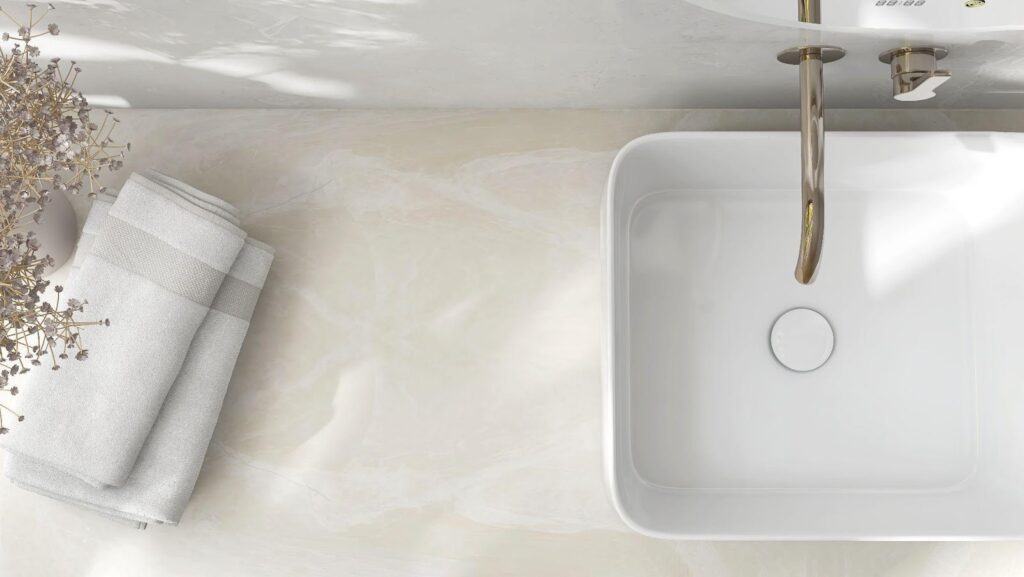
Marble has long been a favorite for homeowners wanting elegance and timeless style. Its natural veining gives bathrooms a soft, luxurious feel that’s hard to replicate. As one of the most visually striking bathroom countertop materials, marble instantly elevates any space. BHG provides in-depth cleaning tips for protecting your marble countertops.
Pros
Marble offers a classic, high-end appearance that suits both traditional and modern designs. It is naturally heat-resistant, meaning hot tools are less likely to cause damage, and its unique veining patterns ensure that every slab is one of a kind.
Cons
Marble’s porous nature makes it susceptible to absorbing moisture and oils, which leads to easy staining from everyday bathroom products like makeup and toothpaste if the surface is left unsealed. Also, acids found in certain skincare and cleaning products can etch and damage the surface.
Quartz countertops
Quartz is one of the most popular bathroom countertop materials today — and for good reason. As an engineered stone, it’s durable, consistent in color, and easy to maintain. Because it’s nonporous, quartz bathroom countertops resist stains, bacteria, and moisture better than many natural stones.
Pros
Quartz countertops are an excellent choice for a busy bathroom due to their extreme durability and scratch resistance. They are completely nonporous, meaning they will not absorb water or harbor germs. Available in a wide array of colors and patterns, including convincing marble mimics, quartz is also very low-maintenance, requiring no sealing.
Cons
Engineered quartz is durable and attractive for bathroom countertops, but it has drawbacks. It’s less heat-resistant than natural stone, so use a heat-safe mat when working with hot tools. Additionally, quartz is more expensive than options such as solid surface.
Granite countertops
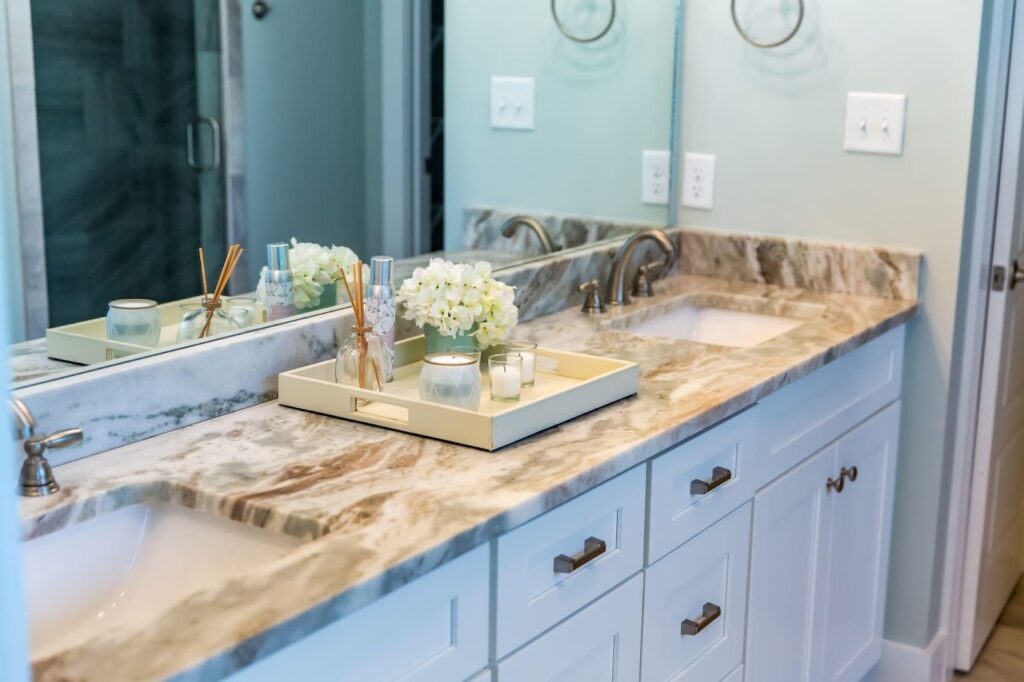
Granite has earned its reputation as one of the most durable and beautiful choices for bathrooms. Its natural mineral patterns and subtle sparkle offer depth and character, making granite bathroom sinks work well with traditional or rustic designs. This stone is a strong contender for homeowners who want longevity with classic appeal.
Pros
Granite offers excellent heat resistance and durability, making it one of the strongest natural stones for countertops. The natural variations inherent in granite create depth, richness, and strong visual interest. It’s also less prone to scratching than softer stones like marble or limestone, adding strong resale value to your home.
Cons
Natural stone countertops require periodic sealing to maintain stain resistance, and the overall cost may be higher depending on the rarity of the slab selected.
Limestone countertops
Limestone brings a soft, natural beauty to bathrooms with its warm tones and subtle, organic patterns. It often contains interesting fossil details, giving it a unique, spa-inspired look. As one of the more delicate bathroom countertop materials, limestone offers charm and character but requires more attentive care.
Pros
Limestone offers a warm, calming aesthetic, ideal for creating spa-like bathroom designs. Its natural, earthy tones complement wood cabinetry and soft color palettes beautifully. The unique textural details of each slab make it a visually interesting choice.
Cons
Marble is a softer stone that scratches more easily than granite or quartz bathroom countertops. Because it is highly porous, it requires frequent sealing. This porosity means it may stain quickly from everyday bathroom products, such as makeup, soaps, and hard water.
Solid surface countertops
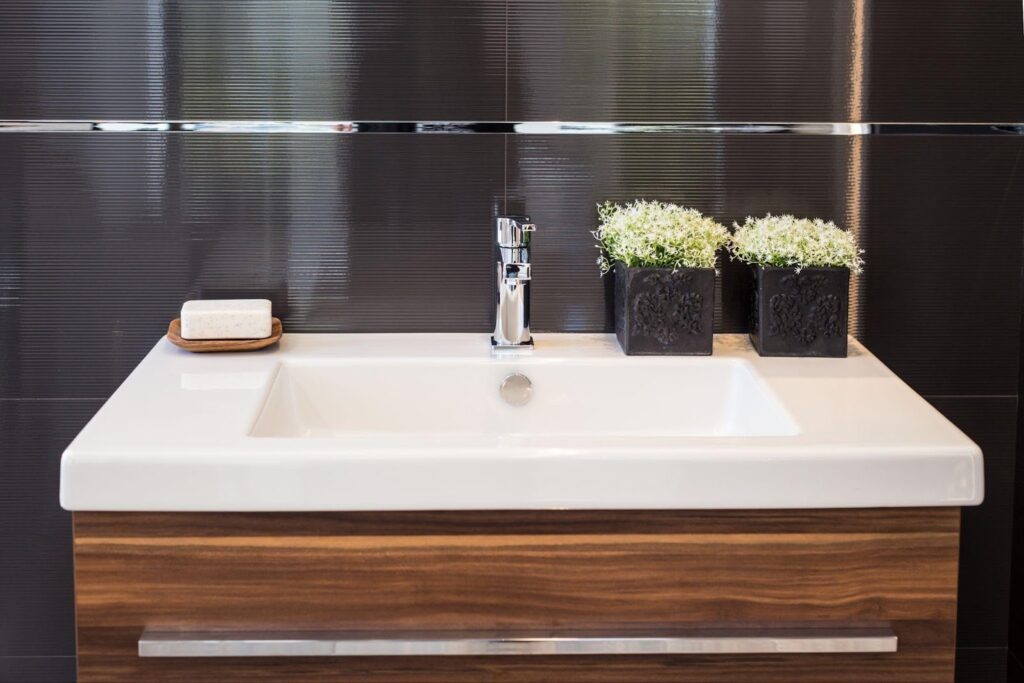
Solid surface materials provide a clean, seamless look at a more budget-friendly price point. Made from a blend of acrylic resins and mineral fillers, they can mimic the appearance of stone without the upkeep. They’re also nonporous, making them one of the easiest bathroom countertop materials to maintain.
Pros
Solid surface countertops are a cost-effective alternative to natural stone, offering a smooth, matte finish with virtually invisible seams. Their non-porous surface makes them easy to sanitize, making them a great choice for bathrooms used daily. Buffing out minor scratches is a convenient benefit.
Cons
Be careful where you set hot styling tools, as this material is not heat-resistant. It scratches more easily than quartz bathroom countertops and lacks the natural depth and variation you see in granite or marble.
Additional bathroom countertop options
While marble, granite, quartz, limestone, and solid surface are the most common choices, today’s market offers several additional, more niche bathroom countertop materials for vanities.
Porcelain slabs
A sleek, ultra-durable option that’s gaining popularity. Porcelain is nonporous, scratch-resistant, and highly heat-resistant. It provides a modern, minimal look designed to resemble stone.
Concrete
Customizable in shape, texture, and color, concrete adds a contemporary, industrial feel. It needs sealing and can develop a natural patina over time, which many homeowners appreciate.
Glass countertops
Colorful and modern, glass provides a bold design moment. It reflects light beautifully, but easily shows fingerprints and water spots.
Tile countertops
Tile can be inexpensive and customizable, but grout lines trap bacteria and moisture, making cleaning harder, especially compared to quartz or granite bathroom sinks.
Comparison summary
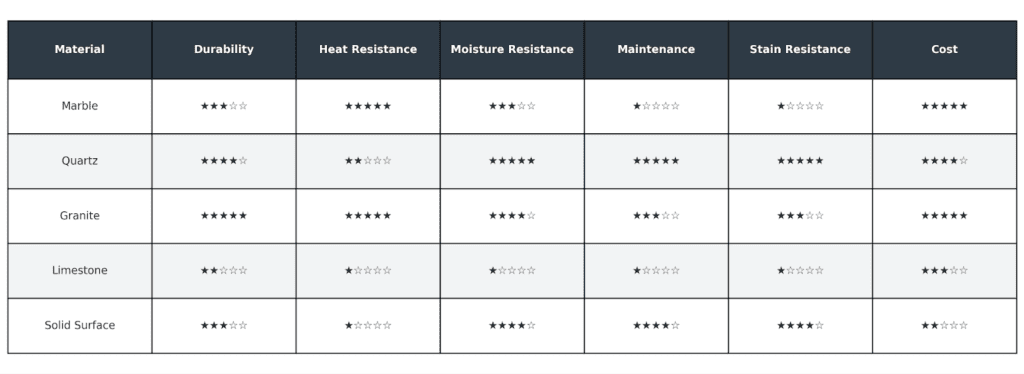
The chart makes it easy to compare popular bathroom countertop materials based on durability, moisture resistance, heat tolerance, and maintenance. Quartz bathroom countertops excel across the board, particularly for families seeking a durable, low-maintenance surface.
Granite also performs well, particularly in terms of heat resistance and overall durability. It’s a strong match for homeowners who want a natural stone. Marble offers timeless style, but its lower stain resistance means it needs more careful upkeep.
Limestone and solid surface materials are great for certain styles and budgets, but they don’t offer the same level of durability or protection as quartz or granite.
Get your next bathroom countertop from Mountain States Kitchen and Bath
Choosing a bathroom countertop is overwhelming, but you don’t have to figure it out alone.
Whether you love the durability of quartz bathroom countertops, the natural beauty of granite bathroom sinks, or the charm of other bathroom countertop materials, Mountain States Kitchen and Bath will help you find the perfect match for your space.
Our team brings years of experience in guiding homeowners through material options, design choices, and installation details, making the process simple and enjoyable from start to finish.
If you’re ready to refresh or fully remodel your bathroom, we’re here to bring your vision to life. Contact Mountain States Kitchen and Bath, and we’ll help you create a bathroom that looks beautiful, functions well, and completes your bathroom.